A safety-conversation guide for unfamiliar work, grounded in public job descriptions and OSHA context.
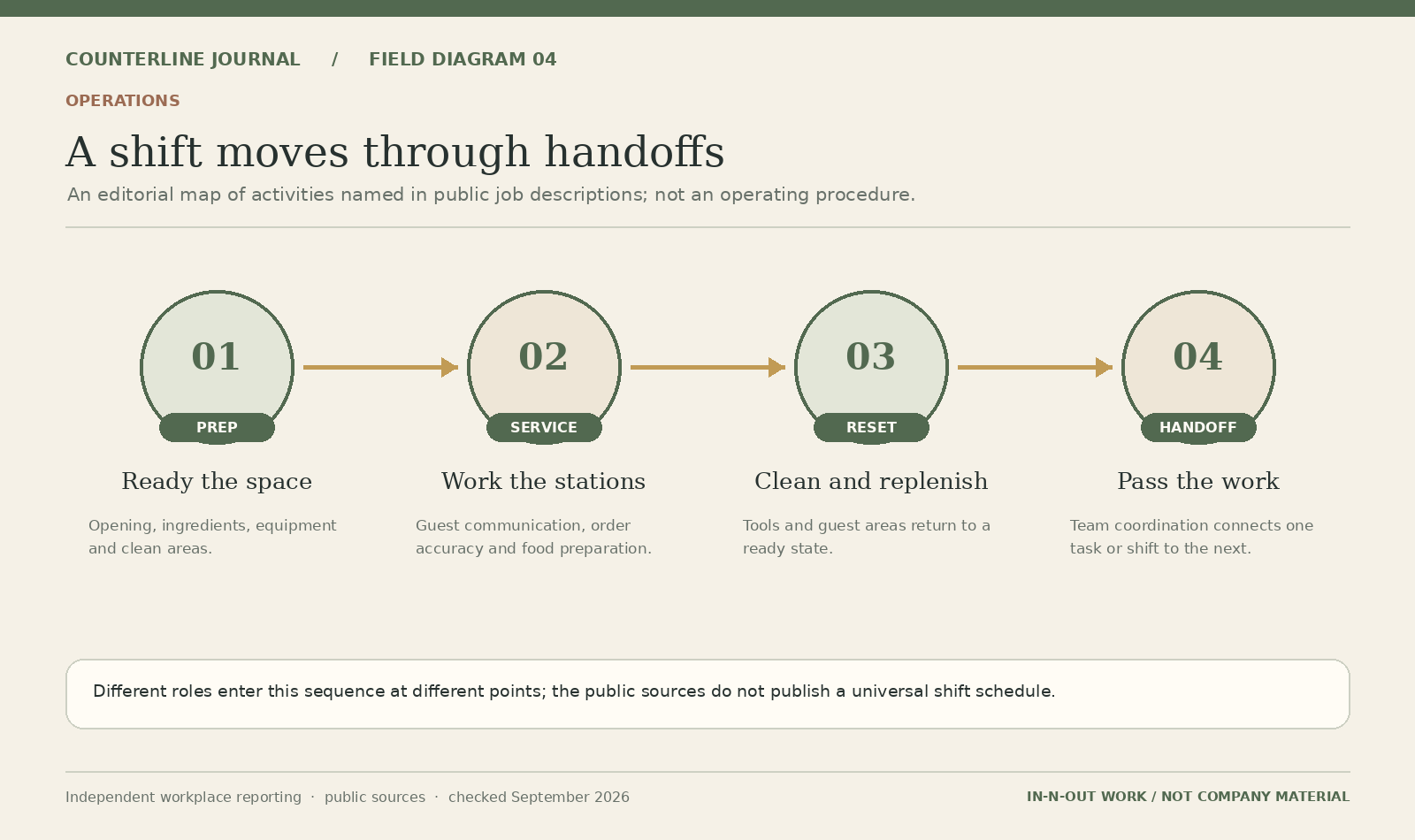
A role description may name a fryer, slicer or cleaning duty without teaching the safe method for that task. Reading an employment article is not equipment training. Before unfamiliar work, know who will instruct you, what you are authorized to do and how to get help.
Why the work setting matters
In-N-Out’s public job descriptions name equipment, crowded work areas, movement and lifting. OSHA’s restaurant safety material discusses hazards such as burns, hot oil, slips and strains in food-service settings. These are general hazard categories; their appearance here is not a claim that a particular In-N-Out location has an unsafe condition.
Ask about the task, not just the tool
| Before working with… | Clarify… |
|---|---|
| An unfamiliar machine | Who demonstrates it, which tasks you may perform and how to report a problem |
| Hot equipment or oil | The employer’s required training, protective equipment and safe work procedure |
| Cleaning products | Which product and instructions apply and who answers questions |
| A heavy or awkward load | The handling method, available equipment and when assistance is needed |
| A changing work area | How hazards and unfinished tasks are communicated to the next person |
The table is an editorial question list. It does not specify chemical mixtures, operating temperatures, machine settings or maintenance instructions. Those details depend on the actual equipment and workplace procedures. Do not substitute a public diagram or a coworker’s remembered shortcut for the required instruction.
Make uncertainty visible early
A practical way to ask is: “I have not been shown this task yet. Who should walk me through it?” If equipment appears damaged or a condition seems unsafe, report it through the workplace’s current process and seek instruction rather than improvising a repair. OSHA emphasizes proper training and following safe procedures.
Know how to get help
Ask where emergency instructions are available, how to report an injury or hazard, and who is responsible when the usual trainer is absent. This article cannot assess an actual incident or provide emergency response training. In an immediate emergency, follow workplace emergency procedures and contact emergency services as needed.
Keep the learning goal distinct from speed
A busy shift can make it tempting to copy what someone else is doing without understanding the task. Ask for the correct method first. The first-shift preparation guide offers a feedback worksheet, while the Store Associate and Clean-Up articles explain the different public duty profiles.