Prepare for instruction, feedback and unfamiliar tasks without inventing an orientation timetable.
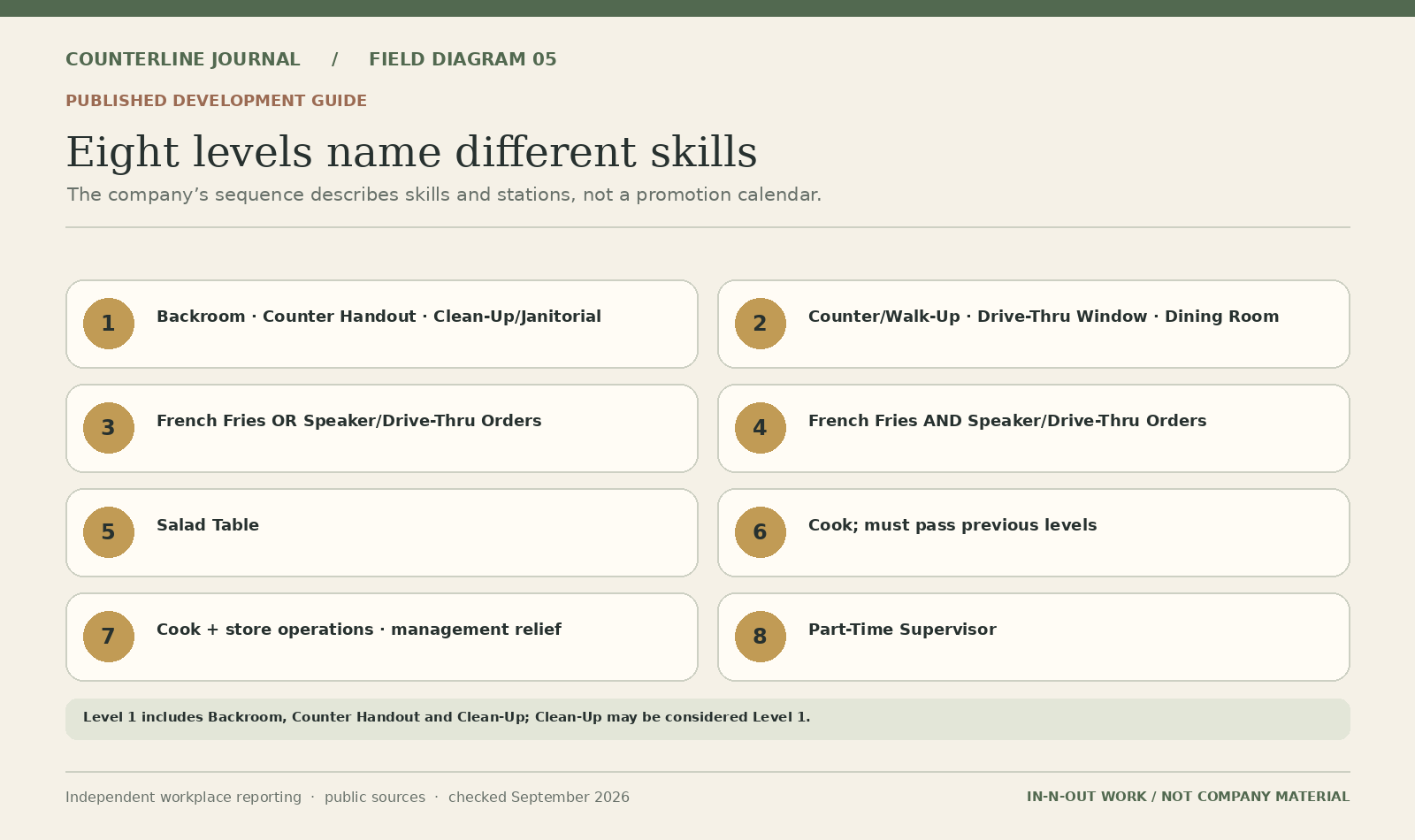
The company publishes a restaurant skills pathway, but a level map is not an orientation calendar. It does not tell a new associate where to report on the first shift, who will teach a station or how many shifts a particular task takes to learn. Those practical details come from the employer’s current instructions.
Before the first scheduled shift
- Confirm the reporting place, arrival time and the person to ask for
- Ask what clothing, footwear and documents are required through the official hiring channel
- Make sure you know whom to contact if travel or another problem affects attendance
- Clarify how the first day’s instructions will be provided
- Keep private employment documents out of public messages and this publication’s inbox
These are preparation questions, not an In-N-Out-issued checklist. Avoid buying specialized items or completing an unofficial course simply because a forum says all new hires need it. Ask the hiring team what applies to your job and location.
During instruction: understand the boundary of the task
A useful learning conversation separates observation, supervised practice and independent assignment. Ask who can answer questions, which parts you are ready to do and what should wait for further instruction. Do not infer permission to operate equipment from seeing it in a job description or a public video.
If you are unsure, identify the specific point you did not understand. “Can you show me where I check this before the handoff?” is more actionable than pretending you are ready. This is an editorial communication example; the correct work method must come from your trainer.
After practice: ask for usable feedback
| Prompt | Purpose |
|---|---|
| What task did I practice? | Keep the subject specific |
| What instruction should I repeat accurately? | Identify the method you are learning |
| Where did I need help? | Make the next question concrete |
| What is the next supervised practice goal? | Turn feedback into a manageable next step |
Do not put customer information, coworker details or private operational records in a personal practice note. A few general learning points are enough. If the employer has its own recording rules, follow them.
Training is not a stopwatch
The eight-level article explains the published station sequence. It does not predict your evaluation date. Readiness may be discussed with a manager; public career stories cannot supply a standard number of shifts. Ask about your own next skill and the way feedback is given.
For equipment or hazard questions, read the safety-conversation guide and follow workplace instruction. This article does not replace required training or establish a universal food-handler credential rule.